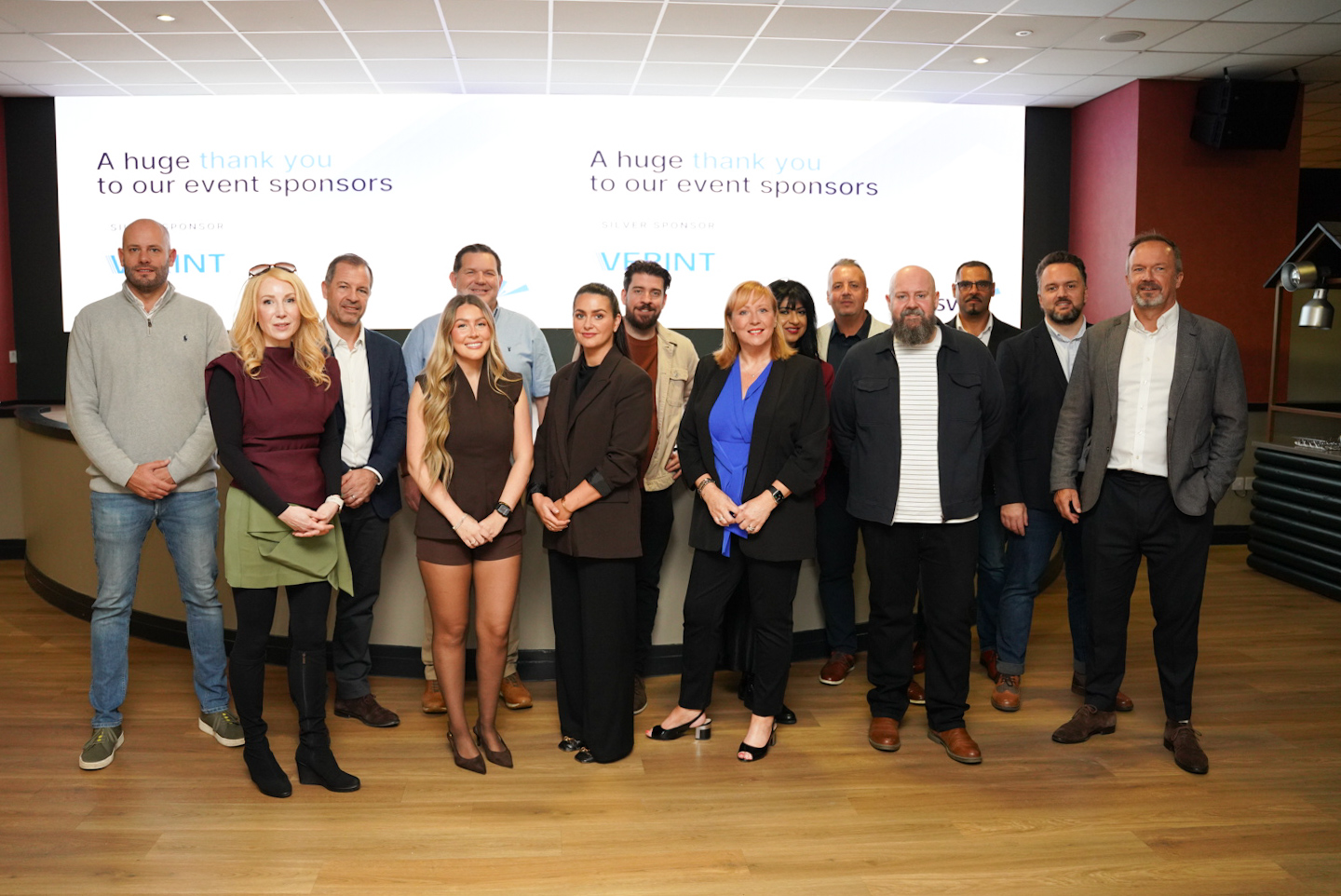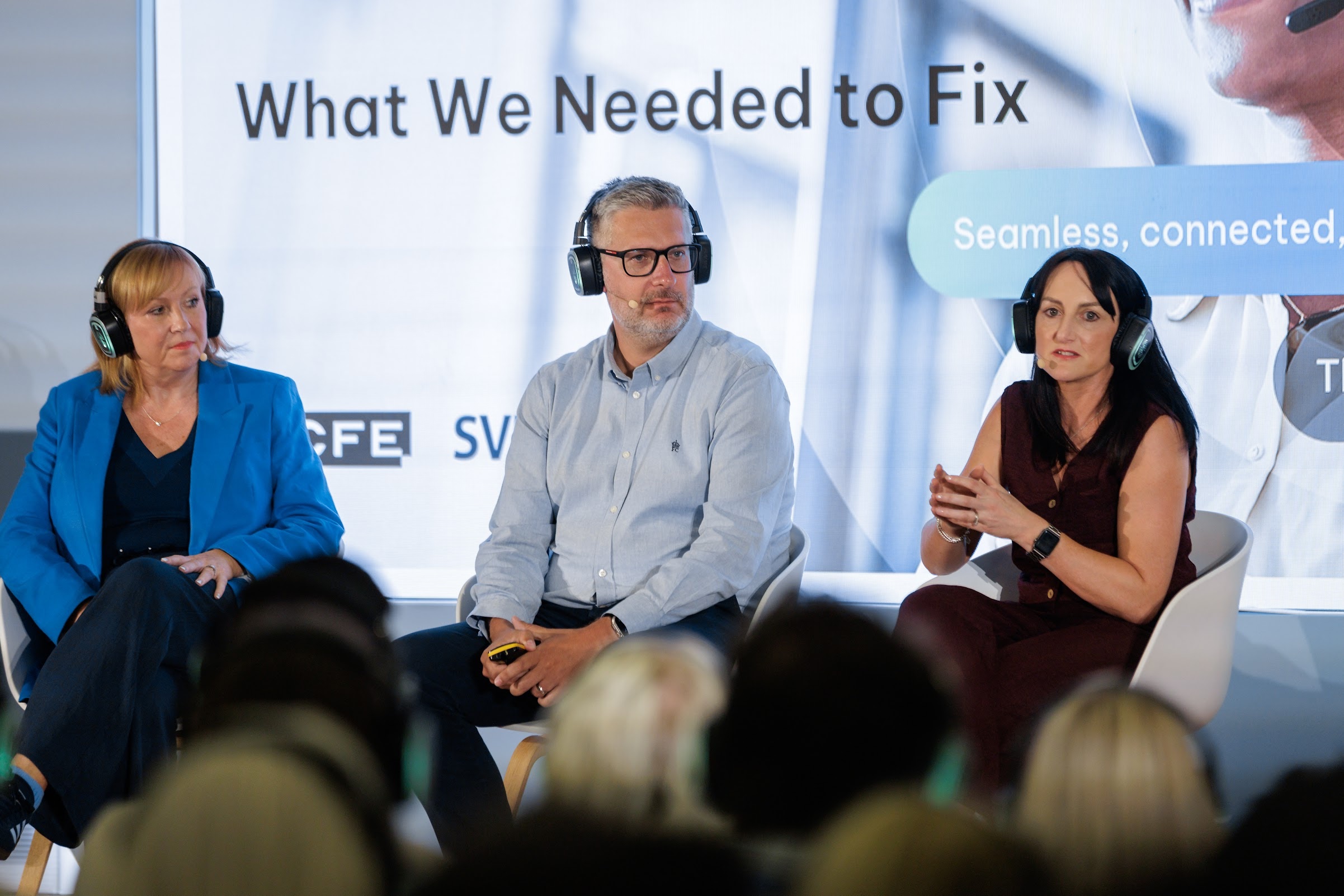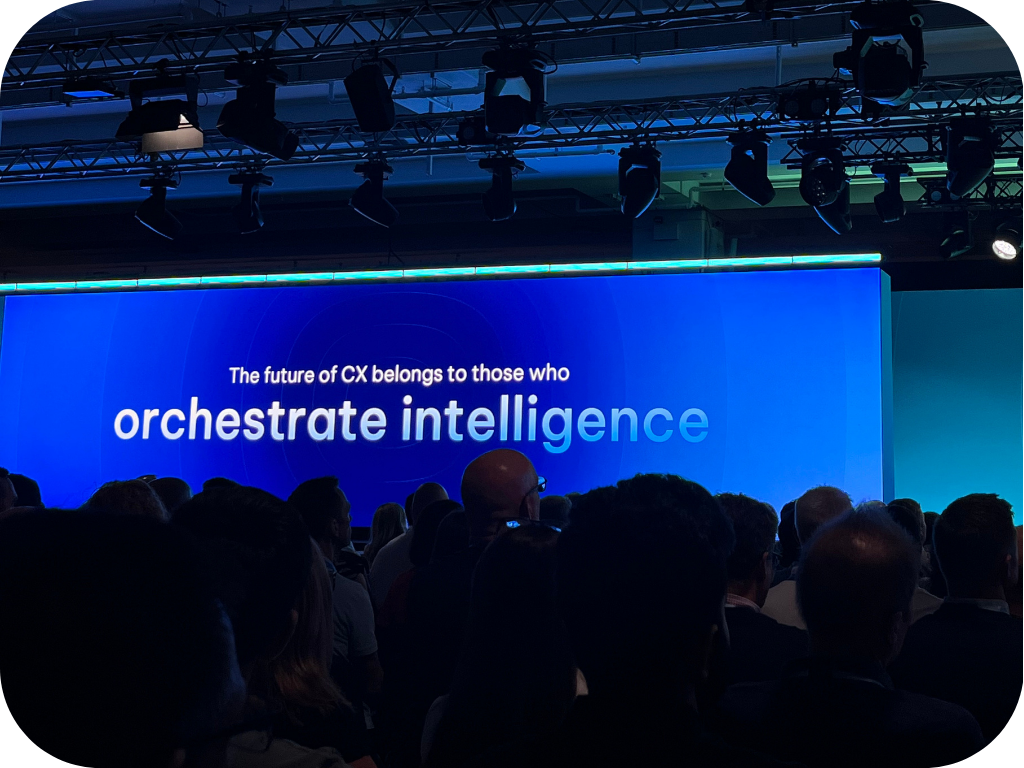

Earlier this month, Anne, Chris and Stevie travelled to Munich with Bluecrest, Cora Health and NBS/NSSL for Nexus 2026. The event brought together more than 1000 CX professionals to hear from customer leaders, technology experts and the NiCE Cognigy team on where AI is heading next in customer service.
The entire event focused on making real progress with AI. Across keynotes, customer success stories, and roundtable discussions, the focus was on agentic AI, real-world adoption and the growing role of NiCE Cognigy in helping organisations scale automation more effectively.
In this blog, we’re recapping some of the main themes that stood out to us, including the shift towards agentic AI, the latest NiCE Cognigy updates, and the customer stories that brought the technology into context.
Agentic AI was the biggest theme
A clear message from the event was that AI is moving into a more mature phase.
The capabilities of agentic AI have improved significantly in a short space of time. AI agents are capable of handling interactions at scale, drawing on relevant knowledge to resolve complex issues, not just routine queries.
The strongest customer examples were not about removing people from the process. Instead, the conversation focused on how agentic AI and human agents can work together, with the right controls and handoffs in place.
NiCE Cognigy updates
Nexus 2026 also gave us a first look at the latest set of NiCE Cognigy innovations.
The focus was on helping organisations identify stronger automation opportunities, build AI agents faster and improve performance over time. Rather than treating AI as a static deployment, the message was about continuous optimisation and better control.
Automation opportunity
A standout update for our team was hearing about the automation opportunity, a new capability designed to analyse engagement data and identify where automation can deliver the greatest impact.
It also helps organisations generate AI agents from those opportunities, making it easier to prioritise use cases with clearer value and speed up setup and deployment.
Better testing and optimisation
NiCE announced expanded multivariate testing, allowing organisations to compare prompts, guardrails, routing logic and models before going live. By simulating interactions at scale, teams can assess likely impact on containment, compliance and CX much earlier.
That is a meaningful step forward for teams looking to improve AI performance in a more structured way.
Multimodal, proactive, hybrid journeys
NiCE Cognigy also introduced a stronger approach to multimodal, proactive and hybrid journeys.
The aim is to bring voice, visual interfaces, structured forms and backend workflows into one connected journey with shared context. AI agents can proactively start interactions, move smoothly into live conversations and support better collaboration between automation and human experts.
This is one of the most useful developments because it reflects how customer journeys actually work. A more connected journey helps reduce friction and makes automation feel more useful rather than more fragmented.
Advanced conversation analytics
Another key announcement was the enhancement of Conversation Analyzer, which uses LLM-based evaluation on transcripts to assess quality, spot anomalies, identify root causes and track trends over time.
Improving AI performance depends on understanding more than just volume or containment. Teams also need visibility into quality, gaps and emerging issues. Better analytics make it easier to refine journeys and improve outcomes over time.
Stronger governance and control
Governance was another recurring theme. As organisations move into more complex use cases, confidence and accountability become just as important as speed.
Cognigy is expanding its integration with the Model Context Protocol (MCP), allowing it to work more securely with external AI tools and development environments, while also making its own capabilities available as governed services within a wider enterprise AI ecosystem.
Customer stories brought the strategy to life
As always, a highlight for our team was hearing the real-world success stories from NiCE Cognigy customers.
Across the event, the most interesting examples came from organisations dealing with complexity at scale. Whether that meant long customer journeys, high contact volumes or more sensitive interactions, the focus was on using AI to reduce friction and improve how service is delivered, rather than simply adding automation for its own sake.
It also became clear that maturity matters. Some organisations are now moving beyond legacy IVR and early chatbot models, and are starting to use AI in ways that are more proactive, more connected and more useful to the wider service operation.
What we took away from Nexus 2026
One of the biggest takeaways for our team was how quickly the conversation is evolving.
Businesses are looking beyond straightforward self-service and asking bigger questions about how AI agents can support more complex journeys, improve service quality and work alongside human teams in a controlled, measurable way.
That direction aligns closely with how SVL approaches conversational AI: focusing on practical outcomes, strong governance and solutions that work across both voice and digital channels.
Staying close to developments like these helps us have better conversations with our customers. It keeps us up to date with how the technology is evolving, where the market is heading and what progress looks like in real deployments.
If you’re reviewing your AI roadmap, or looking at how conversational and agentic AI could support your customer experience strategy, SVL can help you explore the right approach for your organisation.